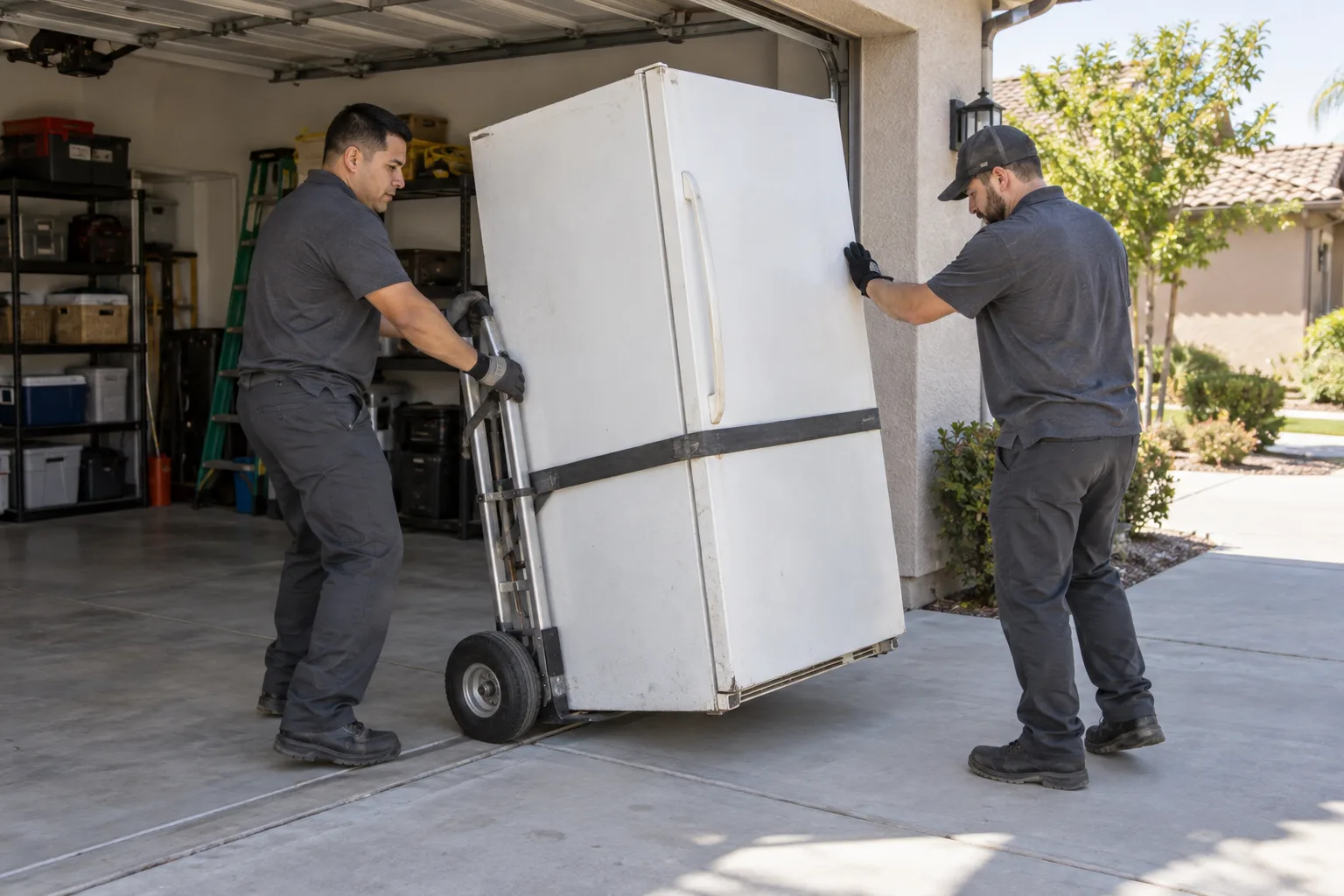
An appliance should be empty, safely disconnected and reachable by a stable dolly route. A qualified professional should handle any connection you are not authorized or prepared to disconnect.
Identify every connection
Washers may have hot and cold water lines and a drain. Dryers may use electricity or gas. Refrigerators can have water lines. Photograph the rear connection area if it is visible without moving the appliance.
Do not improvise with utilities
Shutoff and disconnection depend on the appliance and the home. Do not pull an appliance away from a live gas, water or electrical connection. Arrange the appropriate technician when needed.
Prepare the appliance
Remove food, clothing and loose racks. Defrost freezers early enough to manage water safely, and keep doors secured for movement. Mention any leak, heavy rust or damaged cord before pickup.
Walk the dolly route
Check threshold height, garage-door tracks, gates and tight turns. Clear hoses, extension cords and floor clutter. A smooth path reduces the need to reposition a heavy load.
Details to share
- Appliance type and approximate size
- Whether it is fully disconnected
- Any water, gas or refrigerant concern
- Steps, thresholds and gate width
- Whether another appliance blocks the route
Redlands municipal solid-waste guidance treats metallic appliances and items containing refrigerant differently from ordinary refuse. Confirm the removal plan before placing an appliance with other debris.
Source notes
Material restrictions and municipal options should be checked against the current City of Redlands solid-waste and household hazardous-waste guidance. Service scope is confirmed during the estimate call.