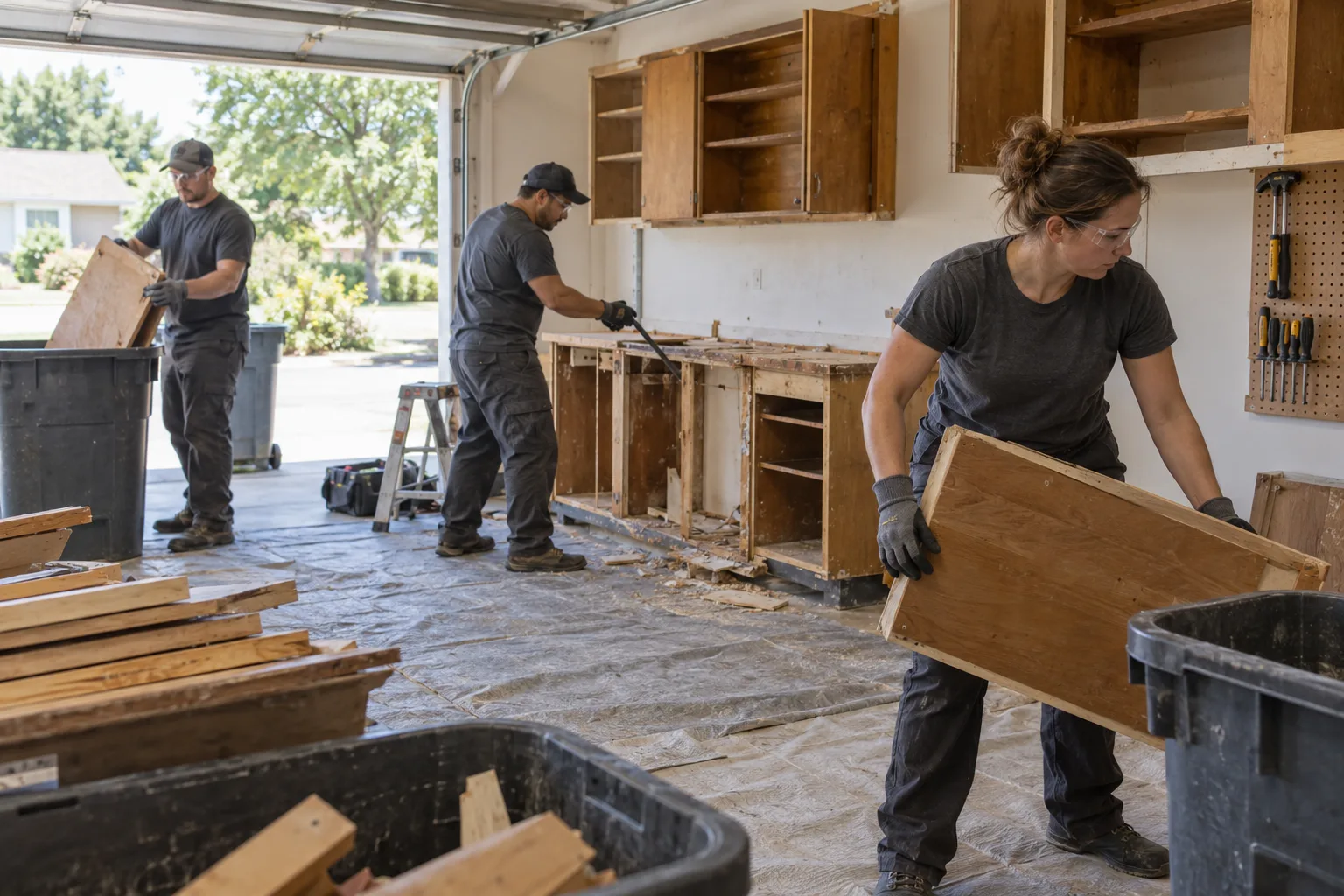
Confirm that the cabinet or workbench is non-structural, identify how it is attached and check for wiring, plumbing or hazardous material before any dismantling begins.
Define the exact tear-out
Freestanding cabinets, wall-mounted storage and a built-in workbench can look similar but require different planning. Mark which pieces go and which wall, floor or tool systems must remain.
Look for utilities
Outlets, lighting, water lines and gas piping may run behind or through garage storage. If a fixture conceals a utility or the route is uncertain, stop and have the appropriate trade assess it.
Check materials and age
Older coatings, wall materials or insulation can require testing before disturbance. Do not sand, cut or break suspected hazardous material. This service page covers approved light dismantling, not structural demolition or hazardous abatement.
Plan containment and removal
Empty cabinets, remove loose shelves and protect items that remain. Nails, screws and sharp offcuts need rigid containment. Keep the driveway clear enough to move sections without dragging them across the floor.
Photos should show the full fixture, every attachment point and the surrounding wall and floor. That context is more useful than a close-up of one hinge.
Source notes
Material restrictions and municipal options should be checked against the current City of Redlands solid-waste and household hazardous-waste guidance. Service scope is confirmed during the estimate call.